

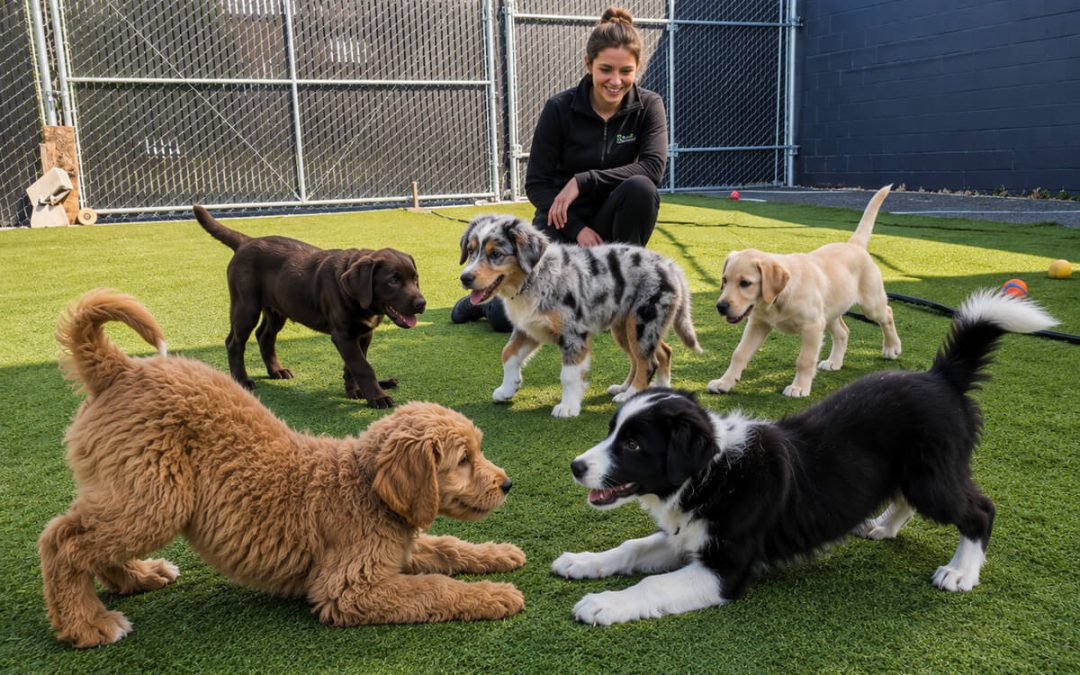
Choosing a puppy daycare is about much more than finding a place for your puppy to burn off energy while you’re at work. During the first year of life, puppies are developing the social skills, confidence, and habits that can shape their behavior for years to come. The right daycare can provide valuable opportunities for puppy socialization, supervised play, and positive learning experiences. The wrong environment, however, can lead to fear, overstimulation, or the development of unwanted behaviors.
With so many facilities offering puppy daycare services, it can be difficult to know what separates an exceptional program from an average one. Should puppies be grouped by age? How much supervision is enough? Is nonstop play really a good thing? What safety procedures should every daycare have in place?
Whether you’re preparing for your puppy’s very first daycare visit or comparing local facilities, asking the right questions will help you make an informed decision. In this guide, we’ll walk through the ten most important questions every puppy owner should ask before choosing a puppy daycare, so you can feel confident you’re selecting a safe, enriching environment where your puppy can learn, play, and grow.
1. How Are Puppies Introduced to Daycare?
A puppy’s first daycare experience should never feel like being dropped into a room full of unfamiliar dogs and expected to “figure it out.” The way a daycare introduces new puppies can have a lasting impact on their confidence, comfort, and future social skills.
A quality puppy daycare begins by getting to know your puppy as an individual. Many puppy owners wonder when their puppy can start daycare. While every facility has its own policies, acceptance is typically based on the puppy’s age, vaccination requirements, and overall readiness—not simply reaching a certain birthday. Before joining group play, staff should evaluate your puppy’s age, temperament, play style, confidence level, and comfort around unfamiliar dogs. This isn’t about passing or failing—it’s about ensuring your puppy has the best possible experience from day one.
Rather than placing every puppy into the same group, experienced staff introduce new arrivals gradually. Puppies are typically matched with calm, socially appropriate dogs that can help them build confidence without becoming overwhelmed. As your puppy grows more comfortable, they can be introduced to additional playmates with similar size, age, and energy levels.
During these early interactions, trained staff should closely monitor body language. A happy puppy may show loose, wiggly movements, playful bows, and curiosity. Signs of stress—such as hiding, excessive vocalizing, tucked tails, or repeatedly trying to escape the group—signal that your puppy may need a slower introduction or a quiet break before trying again.
Remember that every puppy adjusts at a different pace. Some confidently join the fun within minutes, while others need several visits before they truly relax. A reputable daycare respects those differences instead of forcing interaction.
2. How Are Puppy Playgroups Organized?
One of the biggest misconceptions about puppy daycare is that all puppies should play together. In reality, the safest and most enriching daycare programs carefully organize playgroups based on each puppy’s individual needs—not simply their age.
While puppies are often similar in size, their personalities can be dramatically different. Some are bold, energetic, and eager to wrestle with every dog they meet. Others are more reserved and prefer observing before joining the action. A well-managed daycare recognizes these differences and creates groups where puppies can play comfortably without feeling overwhelmed.
Playgroups should be built using several factors, including size, age, play style, energy level, confidence, and social experience. A gentle puppy who enjoys chasing and exploring may not be a good match for a confident puppy that prefers rough-and-tumble wrestling. Likewise, a very young puppy may benefit from calmer companions who model appropriate social behavior rather than older puppies with endless energy.
It’s also important to recognize that healthy puppy daycare playgroups aren’t about constant interaction. Some puppies naturally take breaks to explore, sniff, observe other dogs, or simply rest for a few minutes before jumping back into the fun. Experienced staff understand that this is normal behavior and allow puppies to participate at their own comfort level rather than encouraging nonstop play.
Playgroups should also remain flexible throughout the day. Puppies become tired, excited, or overstimulated as they play, so experienced staff continually monitor interactions and make adjustments when needed. If a puppy is becoming overwhelmed or another group’s energy is a better fit, they should be moved accordingly. The goal isn’t to keep dogs in one group permanently—it’s to provide the right environment as their needs change.
3. How Do Puppies Learn Social Skills at Daycare?
Puppy daycare is about much more than burning off energy. When managed correctly, it provides one of the best opportunities for puppy socialization while helping young dogs develop the communication skills, confidence, and emotional resilience they’ll use throughout their lives. Every interaction with other dogs helps them learn how to communicate, build confidence, and navigate new situations appropriately.
For very young puppies who aren’t yet ready for daycare, puppy preschool can be an excellent first step. These programs typically combine supervised socialization with basic training in a more structured setting, helping puppies build confidence and positive experiences during their earliest months. As puppies mature and meet a daycare’s health and participation requirements, transitioning to a well-managed puppy daycare allows them to continue developing those social skills through longer periods of supervised play.
Dogs communicate primarily through body language. During play, puppies begin learning to recognize signals such as play bows, loose and wiggly movements, turning away, and calming signals that indicate another dog needs a break. They also discover that not every dog wants to play the same way. Some enjoy chasing, others prefer wrestling, while some simply like exploring alongside their friends. Positive puppy socialization isn’t about meeting as many dogs as possible—it’s about having safe, well-supervised interactions that build confidence and teach appropriate behavior.
Puppies also learn important manners that are difficult to teach through human interaction alone. They discover that biting too hard or playing too roughly often causes another puppy to stop playing. This natural feedback helps them develop better bite inhibition, self-control, and respect for other dogs’ boundaries. Over time, they become more skilled at adjusting their play style to match different companions.
Of course, these lessons don’t happen automatically. Without proper supervision, puppies can rehearse undesirable behaviors such as bullying, excessive barking, or becoming overly aroused. That’s why trained staff play such an important role. They closely monitor body language, interrupt inappropriate behavior before it escalates, reward polite interactions, and provide breaks when puppies become overstimulated. Their guidance helps ensure puppies practice good habits instead of reinforcing bad ones.
4. Why Is Rest Just as Important as Play?
When people imagine puppy daycare, they often picture hours of nonstop running, wrestling, and chasing. While play is certainly important, constant activity isn’t healthy for growing puppies. In fact, one of the biggest signs of a high-quality puppy daycare is that it values rest just as much as exercise.
Like young children, puppies have not yet developed the ability to recognize when they’re overtired. Instead of slowing down, many become more excitable, impulsive, and less responsive to social cues. An overtired puppy may play too roughly, ignore another dog’s signals to stop, or become easily frustrated. What looks like “extra energy” is often simply exhaustion.
Regular rest periods are just as important as active play for growing puppies. While they sleep or relax, their bodies recover from physical activity, growing muscles and joints have time to develop, and their minds get a chance to slow down after a busy day. Puppies that are given appropriate breaks are often calmer, more engaged, and better equipped to interact appropriately when they return to play.
Rest also plays an important role in learning. Throughout the day, puppies are constantly encountering new dogs, people, environments, sounds, and experiences. Quiet time gives their developing brains an opportunity to organize and reinforce those experiences, helping them gain confidence, strengthen social skills, and better remember the positive lessons they’ve learned.
That’s why structured daycare programs don’t rely on nonstop group play. Instead, the day should alternate between active play sessions and quiet downtime in a comfortable, low-stimulation environment. This balance helps prevent overstimulation while giving puppies the opportunity to enjoy positive interactions without becoming overwhelmed.
5. What Makes a Safe Puppy Daycare?
When choosing a puppy daycare, it’s easy to focus on amenities like large play areas or fun-looking equipment. While those features can be appealing, they don’t tell the whole story. What truly makes a daycare safe is the quality of its supervision, staff training, and daily operating procedures.
Safe daycare begins with knowledgeable staff who understand how puppies communicate through their body language. Experienced handlers can recognize subtle changes that signal a puppy is becoming overwhelmed, anxious, overstimulated, or uncomfortable. Instead of reacting after a problem develops, they take proactive steps—such as redirecting play, providing a rest break, or adjusting the playgroup—to help keep every interaction safe and positive.
One of the biggest differences between a quality puppy daycare and a dog park is supervision. At a dog park, owners are responsible for watching their own dogs, and playgroups often form naturally without considering compatibility. In contrast, a well-managed puppy daycare intentionally creates playgroups, actively supervises every interaction, and steps in early to prevent problems before they occur.
Playgroup management is equally important. Puppies should never be grouped simply because they’re all the same age. Factors such as size, confidence, energy level, and play style all influence whether dogs are compatible. Carefully matched playgroups help reduce the risk of injuries while creating a more enjoyable experience for every puppy.
Health and cleanliness also play a vital role. Reputable facilities require current vaccinations, maintain strict cleaning and sanitation protocols, and have procedures for managing illness. They should also have clear policies for handling injuries, emergencies, and dogs showing signs of illness to help protect every puppy in their care. Safe flooring that provides reliable traction, secure fencing, controlled entry and exit points, and regular equipment inspections all contribute to a safer environment.
Perhaps most importantly, a quality daycare knows when a puppy needs a break. Continuous play can quickly lead to overtired, overstimulated puppies that make poor social decisions. Scheduled rest periods are an essential part of keeping puppies both physically and emotionally healthy throughout the day.
If you’re researching puppy daycare options, it’s also worth reviewing the American Kennel Club‘s guidance on choosing a dog daycare. Their recommendations reinforce many of the same principles, including evaluating staff supervision, safety procedures, cleanliness, and how dogs are grouped.
6. What Does a Typical Puppy Day Look Like?
A well-designed puppy daycare day isn’t a marathon of nonstop play—it’s a carefully balanced routine that combines socialization, exercise, learning, rest, and individual care. Puppies thrive on consistency, and a structured schedule helps them feel secure while preventing them from becoming overtired or overwhelmed.
The day typically begins with a calm arrival and a chance for puppies to settle into their playgroup. Rather than immediately releasing every dog into one large group, quality daycares gradually ease puppies into supervised play with compatible companions. This allows staff to observe each puppy’s mood and energy level while ensuring everyone gets off to a positive start.
Throughout the day, puppies rotate between active play sessions and scheduled rest periods. During play, they practice important social skills, explore new environments, and burn energy through age-appropriate activities. Just as importantly, they also have opportunities to step away from the excitement, relax, and recharge before returning to the group.
Bathroom breaks, fresh water, and individual attention are woven into the daily routine. Staff continuously monitor each puppy’s body language, adjusting playgroups or providing additional breaks when needed. Some puppies may need extra encouragement to build confidence, while others benefit from reminders to slow down and take a break.
A quality puppy daycare should design its daily schedule around what puppies need—not simply keeping them active. Puppies should enjoy supervised indoor and outdoor play in thoughtfully matched groups, followed by scheduled naps in a quiet area where they can recover and process everything they’ve learned. Throughout the day, staff should closely monitor every interaction to ensure each puppy has positive social experiences while remaining safe and comfortable.
By pickup time, the goal isn’t for your puppy to be completely exhausted. Instead, they should head home happy, mentally enriched, and ready to relax after a day filled with healthy play, learning, and plenty of well-earned rest.
7. How Will I Know My Puppy Is Enjoying Daycare?
Every puppy adjusts to daycare at their own pace. Some bounce through the door on their very first visit, while others need a few days—or even a few weeks—to build confidence. The key isn’t expecting instant excitement; it’s watching for gradual signs that your puppy feels safe, comfortable, and happy in the daycare environment.
One of the clearest indicators is your puppy’s body language during drop-off and pickup. A puppy who enters willingly, approaches staff with a loose, relaxed body, and eagerly greets familiar canine friends is usually telling you they enjoy being there. Over time, many puppies begin pulling toward the entrance or wagging enthusiastically as they recognize where they’ve arrived.
You’ll often notice changes at home, too. A puppy who has enjoyed a balanced daycare day is typically pleasantly tired rather than completely exhausted. They settle more easily, nap comfortably, and often display increased confidence in new situations. Many owners also notice improvements in leash manners, bite inhibition, and interactions with other dogs as their puppy gains positive social experience.
Communication from the daycare is another important clue. Reputable facilities should share updates about your puppy’s day, including who they played with, how they interacted with other dogs, whether they rested well, and anything staff are working on. Honest communication should include both successes and areas where your puppy is still developing, helping you understand their progress over time.
8. What to Ask Before Enrolling Your Puppy?
Not all puppy daycare programs are created equal, so asking the right questions can help you find a facility that’s the best fit for your puppy. While every daycare has its own approach, their answers should give you confidence that they prioritize safety, learning, and your puppy’s overall well-being.
Start by asking how puppies are evaluated before joining a playgroup. Is there an introduction process, or are new puppies immediately placed with unfamiliar dogs? A thoughtful evaluation helps staff understand your puppy’s personality, confidence level, and play style before deciding which companions will be the best match.
Next, ask how playgroups are organized. Puppies shouldn’t simply be grouped by age or size alone. A quality daycare also considers temperament, energy level, and social skills when creating compatible groups. It’s also worth asking how staff monitor play and what they do if a puppy becomes overwhelmed or overly excited.
Don’t forget to ask about supervision. How many staff members are actively watching the dogs? Are they trained to recognize canine body language and intervene before problems develop? Experienced supervision is one of the most important factors in preventing conflicts and ensuring puppies have positive experiences.
You should also ask about cleaning protocols, vaccination requirements, emergency procedures, and how the daycare communicates with owners. Will you receive updates about your puppy’s day? How are injuries or illnesses handled? A reputable daycare should answer these questions openly and confidently.
It’s also worth asking how a typical day is structured. Some facilities rely heavily on extended kennel time, with puppies spending much of the day waiting for their next play session. While regular rest is essential for healthy development, puppies also need adequate opportunities for supervised play, exploration, and positive social interaction. A well-designed daycare balances activity and downtime so puppies receive enough exercise and enrichment without becoming overtired or overstimulated.
If you’d like to continue your research, the veterinarians at PetMD have also published a helpful checklist of questions to ask when evaluating a dog daycare facility. Comparing multiple trusted resources can help you feel even more confident that you’re choosing a safe, reputable environment for your puppy.
9. What Are the Most Common Puppy Daycare Mistakes?
Choosing a puppy daycare is an important decision, but even the best daycare experience can be affected by a few common mistakes made before or during the process. Fortunately, most are easy to avoid once you know what to look for.
One of the biggest mistakes is choosing a daycare based solely on price or convenience. While location and cost certainly matter, they shouldn’t outweigh factors like safety, supervision, and staff experience. A well-managed daycare invests in trained employees, structured playgroups, and proper procedures that help keep puppies safe and set them up for success.
Another common mistake is expecting every daycare to operate the same way. Some facilities focus primarily on large, high-energy playgroups, while others emphasize structured socialization, rest periods, and individualized attention. Touring the facility, asking questions, and understanding its philosophy can help you determine whether it’s the right fit for your puppy’s personality and needs.
Owners also sometimes expect too much, too soon. It’s normal for puppies to need time to adjust to a new environment. Some settle in during their first visit, while others become more confident over several sessions. Patience and consistency often lead to the best long-term results.
Finally, don’t overlook communication. Sharing important information about your puppy—including medical history, training goals, fears, or recent changes at home—helps daycare staff provide the best possible care. Likewise, choosing a daycare that openly communicates about your puppy’s progress allows you to reinforce good habits at home and address any concerns early.
10. How Can I Help My Puppy Succeed at Daycare?
Your puppy’s daycare experience doesn’t begin when they walk through the front door—it starts at home. The habits you build, the information you share, and the expectations you set all play an important role in helping your puppy feel confident and successful in a new environment.
Before your puppy’s first visit, make sure they’re up to date on the daycare’s required vaccinations and have had opportunities to experience new people, places, sounds, and handling in a positive way. Early exposure to everyday experiences helps puppies develop resilience and confidence, making the transition into daycare much smoother.
It’s also important to communicate openly with the daycare staff. Let them know if your puppy has any fears, medical concerns, training goals, or unique personality traits. Maybe they’re hesitant around larger dogs, become overly excited during play, or are working on polite greetings. The more information staff have, the better they can tailor the experience to your puppy’s individual needs.
Remember that consistency is key. Puppies generally adjust more quickly when they attend daycare on a regular schedule rather than visiting only occasionally. Repeated positive experiences help them become familiar with the environment, build relationships with staff and canine friends, and develop confidence over time.
Finally, trust the process. It’s normal for puppies to be tired after daycare, and it’s equally normal for them to need several visits before they fully settle into the routine. Celebrate the small milestones—making a new friend, becoming more confident, or learning better social manners. These gradual improvements often have lasting benefits both at daycare and at home.
Choosing the Right Puppy Daycare
Finding the right puppy daycare isn’t about choosing the biggest facility or the one with the flashiest amenities—it’s about finding a program that prioritizes safety, thoughtful socialization, structured learning, and your puppy’s long-term development. By asking the right questions and understanding what happens behind the scenes, you’ll be better equipped to choose a daycare where your puppy can thrive.
The best daycare programs recognize that every puppy is unique. They carefully introduce new dogs, create compatible playgroups, provide plenty of supervision, balance activity with rest, and communicate openly with owners. These elements work together to build confidence, encourage healthy social skills, and create positive experiences that extend well beyond daycare.
At Four-Legged Fun Zone, we’ve designed our puppy daycare program around these same principles. From our Meet & Greet evaluation and carefully matched playgroups to scheduled naps in our Dream Den and ongoing communication with pet parents, our goal is to provide a safe, structured environment where puppies can learn, play, and grow at their own pace.
If you’re looking for a puppy daycare in Everett, WA, we’d love to show you what makes our program different. Contact Four-Legged Fun Zone today to schedule a Meet & Greet and discover how we can help give your puppy a positive start to a lifetime of confidence, friendship, and fun.


Recent Comments