

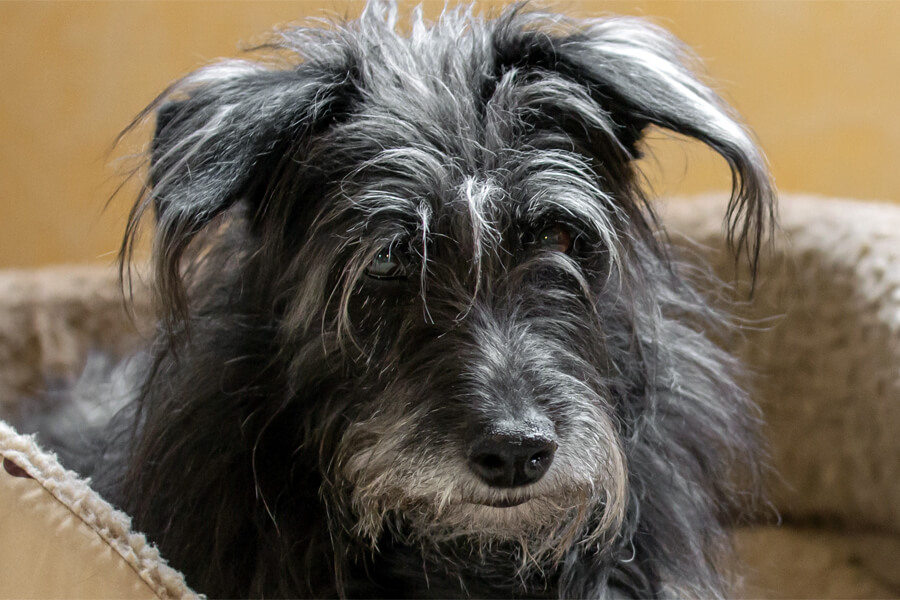
One day, she snapped at the air.
Not at a person. Not even at me.
Just a quick, startled reaction to something she couldn’t see.
This was a dog who had known my scent, my hands, my routines for years. I had handled her countless times. But in that moment, she was confused — and afraid. Her vision had declined quietly, and the world no longer looked the way it used to. Touch arrived before context. Instinct took over.
For caregivers, experiences like this can be unsettling and often feel like they come out of nowhere. Many people worry they’ve done something wrong — or worse, that their dog is suddenly becoming aggressive. Moments like this are exactly why senior dogs need to be handled differently, with time, patience, and an approach that assumes their world may feel less predictable than it once did. That philosophy is what guides our Senior Dog Grooming service for older dogs who need extra comfort and gentle handling.
In reality, reactions like these are often signs of something else entirely — a dog whose perception of the world is changing with age.
When “Something Feels Off” but You Can’t Explain Why
Many people who live with senior dogs describe the same feeling.
“She just isn’t herself anymore.”
“He seems confused sometimes.”
“Something feels different, but I can’t put my finger on it.”
You might notice small things at first: hesitation in familiar spaces, increased startle responses, restlessness at night, changes in tolerance for touch, or a shorter fuse during handling. These changes often develop slowly, which makes them easy to dismiss or misinterpret.
But research and lived experience tell us something important: behavioral changes in senior dogs are often communication.
Why Behavior Changes Happen as Dogs Age
According to PetMD, as dogs age they can show a wide range of behavioral changes that aren’t “just moodiness.” Older dogs may become more vocal, anxious, or sensitive, show signs of confusion or disorientation, have trouble with housetraining, and even act destructively — all of which can stem from sensory decline, discomfort, or underlying cognitive changes rather than willfulness.
These factors rarely exist in isolation. A dog may be experiencing more than one at the same time, and the effects compound. A dog who cannot see well may rely more heavily on scent and sound. A dog with hearing loss may be startled when touched unexpectedly. A dog with arthritis may find certain positions painful and become reactive when asked to hold them.
None of this means the dog is “bad” or “difficult.” It means the rules of their world have changed.
When Familiar Interactions Become Frightening
One of the hardest things for caregivers to understand is how a dog who has always tolerated something can suddenly struggle with it. Touch is a common example.
As dogs age, they often lose the ability to anticipate what’s coming next. Vision and hearing provide context. When those senses fade, hands can arrive without warning. Combined with pain or stiffness, the nervous system may respond defensively before the dog has time to process what’s happening.
This is how air-snapping, flinching, or growling can appear “out of nowhere.” In reality, these reactions are often reflexive, not deliberate.
Anxiety, Confusion, and the Senior Dog Brain
Some senior dogs experience changes similar to cognitive decline in humans. This can include confusion, altered sleep cycles, increased anxiety, pacing, or getting stuck in corners or behind furniture.
Other dogs may not meet the criteria for cognitive dysfunction but still struggle with processing information efficiently. Their world feels less predictable. Routine matters more. Environmental changes feel bigger.
These dogs often do best when routines are consistent, environments are calm and predictable, interactions are slow and clearly signaled, and handling is gentle and flexible.
Why Close-Contact Care Requires a Different Approach
Activities like grooming, nail trims, veterinary exams, and medical care bring many of these challenges together at once. They involve unfamiliar sensations, physical manipulation, changes in posture or balance, sustained handling, and environmental stimulation.
For a senior dog with arthritis, hearing loss, anxiety, or cognitive changes, this can be overwhelming even if they tolerated it easily when they were younger.
What Gentle, Senior-Aware Handling Looks Like
Senior dogs often benefit from handling that moves at their pace, allows for frequent pauses, minimizes noise and visual stimulation, avoids rushing or forced positioning, and respects signs of fatigue or discomfort.
Small adjustments can make a big difference: approaching from the side, letting a dog sniff hands before touch, supporting stiff back legs, breaking tasks into shorter segments, and stopping before stress escalates.
Safety Through Understanding
When behavioral changes go unrecognized, bites rarely happen because a dog is “mean.” They happen because a dog is startled, confused, or in pain.
Understanding how aging changes perception allows caregivers to modify how they approach, speak to, and touch their dogs, reducing fear and keeping everyone safer.
Grooming Through the Lens of Senior Care
For some families, professional grooming becomes part of a senior dog’s support system, particularly when grooming is adapted to aging needs rather than speed or volume.
Senior-aware grooming prioritizes one-on-one care, quiet environments, flexible timing, start-to-finish appointments, and respect for physical limitations.
What Senior Grooming Looks Like in Practice – From the Groomer’s Perspective
When you groom dogs long enough, you start to notice changes that don’t show up all at once. Senior dogs rarely wake up one day unable to tolerate grooming — instead, it’s subtle shifts that happen over months or years.
As a groomer who works closely with older dogs, I often see these changes before families realize anything has shifted. A dog who stood comfortably for a full groom last year may now lean heavily, sit without warning, or seem startled when touched from a direction they didn’t expect. These aren’t “behavior problems.” They’re signs that the dog’s body or senses are changing.
Some of the first changes I notice is a stiffness of the joints. At this point I like to check in with the pet parent about any joint supplements or pain management medications they might be on. If they’re not on anything, I always recommend they see the vet to get started. Vision loss or hearing loss, or an increase in strange skin bumps, are also common signs a dog is getting older.
Small Changes That Mean Big Adjustments
One of the biggest misconceptions about senior dog grooming is that it should look the same as it did when the dog was younger. In reality, the entire goal shifts.
For many older dogs, grooming becomes less about how they look and more about how they feel afterward.
That can mean:
- Shorter appointments instead of one long session
- More frequent visits to prevent matting and overgrown nails
- Sitting or lying down during parts of the groom
- Slower transitions between steps
- Extra breaks built in — even if the dog seems “okay” at first
For example, a dog who once tolerated a full bath, blow-dry, and haircut may now do better with the bath and drying one day, and trimming another day. Others may need towel-drying only, or quiet, low-air drying because high-velocity dryers suddenly feel overwhelming.
If a dog is sore, I allow them to sit. We settle for less than perfect. The dryer can become scary so sometimes I need to dry on low instead of high.
When Familiar Dogs Start Acting “Different”
One of the hardest moments for families is when a dog who has known their groomer for years suddenly reacts in a way that feels out of character.
Sometimes this looks like:
- Snapping at the air when approached from the side
- Startling when touched near the face or rear
- Becoming anxious during steps they previously tolerated
- Pulling away, freezing, or vocalizing unexpectedly
These reactions are often linked to vision loss, hearing changes, or cognitive decline — not aggression. A dog may no longer recognize who is touching them until they smell them. Others may feel disoriented when their body is moved in ways they can no longer anticipate.
In grooming, this means we slow down even more. We make sure dogs know we’re there before touching them. We avoid surprises. We keep routines consistent. And when something no longer feels safe for the dog, we stop.
Letting Go of “Perfect”
One of the most important conversations I have with senior dog families is about expectations. As dogs age, comfort has to come before cosmetics.
That might mean:
- A simpler haircut
- A shorter overall length
- Skipping detailed scissoring in sensitive areas
- Leaving a coat slightly uneven rather than pushing a tired dog further
This isn’t “giving up.” It’s choosing kindness.
A groom doesn’t have to be perfect to be successful. If a senior dog leaves clean, comfortable, and less sore than when they arrived, that’s a win.
Your dog doesn’t care what it looks like. They have no sense of vanity or pride in their appearance. But they know how they feel after grooming. If it feels better for them and it’s less upkeep for you, why would we choose the more difficult, uncomfortable, time consuming path? The benefit of comfort grooms is an important conversation to have.
Why Routine Matters More Than Ever
Senior dogs thrive on predictability. Seeing the same groomer, coming in on a regular schedule, and following a familiar routine can make an enormous difference in how well they tolerate grooming.
Dogs who come in consistently often:
- Stay calmer during handling
- Require less time per visit
- Avoid severe matting or nail overgrowth
- Show less anxiety overall
When grooming is delayed for months, even well-intentioned owners often unknowingly create a much harder experience for their dog. What could have been a short, gentle session becomes longer and more physically demanding — exactly what older bodies struggle with most.
When dogs see the same groomer and go through the same processes month after month, it really shows. When a dog goes blind they can still smell it’s me. They can smell the shampoos. They know what to expect even without all their senses. We’ve built trust over the years and they know I’m listening.
The Role Groomers Play in Senior Dog Care
Groomers are often among the first professionals to notice when something has changed. Lumps, skin changes, sensitivity, new anxiety, or declining tolerance can all show up during grooming long before they become obvious at home. Our role isn’t to diagnose — but it is to observe, adjust, and communicate.
Senior grooming is a collaboration between the dog, their family, their veterinarian, and their groomer. When everyone works together, aging dogs can stay cleaner, more comfortable, and less stressed well into their later years.
Working with senior dogs is a privilege. They’ve been through everything with us. Everyone talks about the challenges of raising a puppy, but no one talks about how difficult it is to watch that puppy grow into a wonderful dog who means the world to you. That same wonderful dog starts declining in health. Wondering when you’ll have to make a decision you’re never ready for. Wondering what diagnosis is next. We take such good care of our dogs now, we’re dealing with more and more “old dog issues” than ever before. Be good to them. Because that’s going to be you one day. And I hope someone treats you with the same kindness and understanding.
Supporting Senior Dogs at Home
Professional care is only part of the picture. Senior dogs benefit from predictable routines, gentle touch, environments adapted to mobility or vision changes, and regular veterinary oversight.
Simple adjustments like improved lighting, non-slip flooring, supportive bedding, or slower transitions can dramatically improve quality of life.
For Foster Families and Rescues
Senior dogs in foster care often arrive with incomplete histories. Behavioral changes may be mistaken for temperament when they are actually responses to loss, confusion, or physical discomfort.
Education empowers foster families to advocate for dogs and helps dogs remain safe and understood.
Compassion Over Assumptions
Behavior is communication. When we stop asking “What’s wrong with this dog?” and start asking “What is this dog telling me?” we change the outcome.
Senior dogs are not becoming difficult. They are becoming vulnerable.
Final Thoughts
Aging changes how dogs experience the world. But with understanding, patience, and thoughtful care, senior dogs can continue to feel safe, supported, and respected.
Gentle handling, calm environments, and flexible expectations are not extras. They are acts of dignity.
At Four-Legged Fun Zone, our Senior Dog Grooming service is built around these principles — offering one-on-one care, a quiet environment, and a pace that respects what older bodies and minds need. If your senior dog is struggling with traditional grooming, you can learn more about our approach here.

Recent Comments